ChatGPT Wallet Is Here. What It Means for Your Business
OpenAI just launched ChatGPT Wallet, a way for agents to pay after you approve the purchase. Here's what they actually shipped, who can use it today, and what businesses should pay attention to.
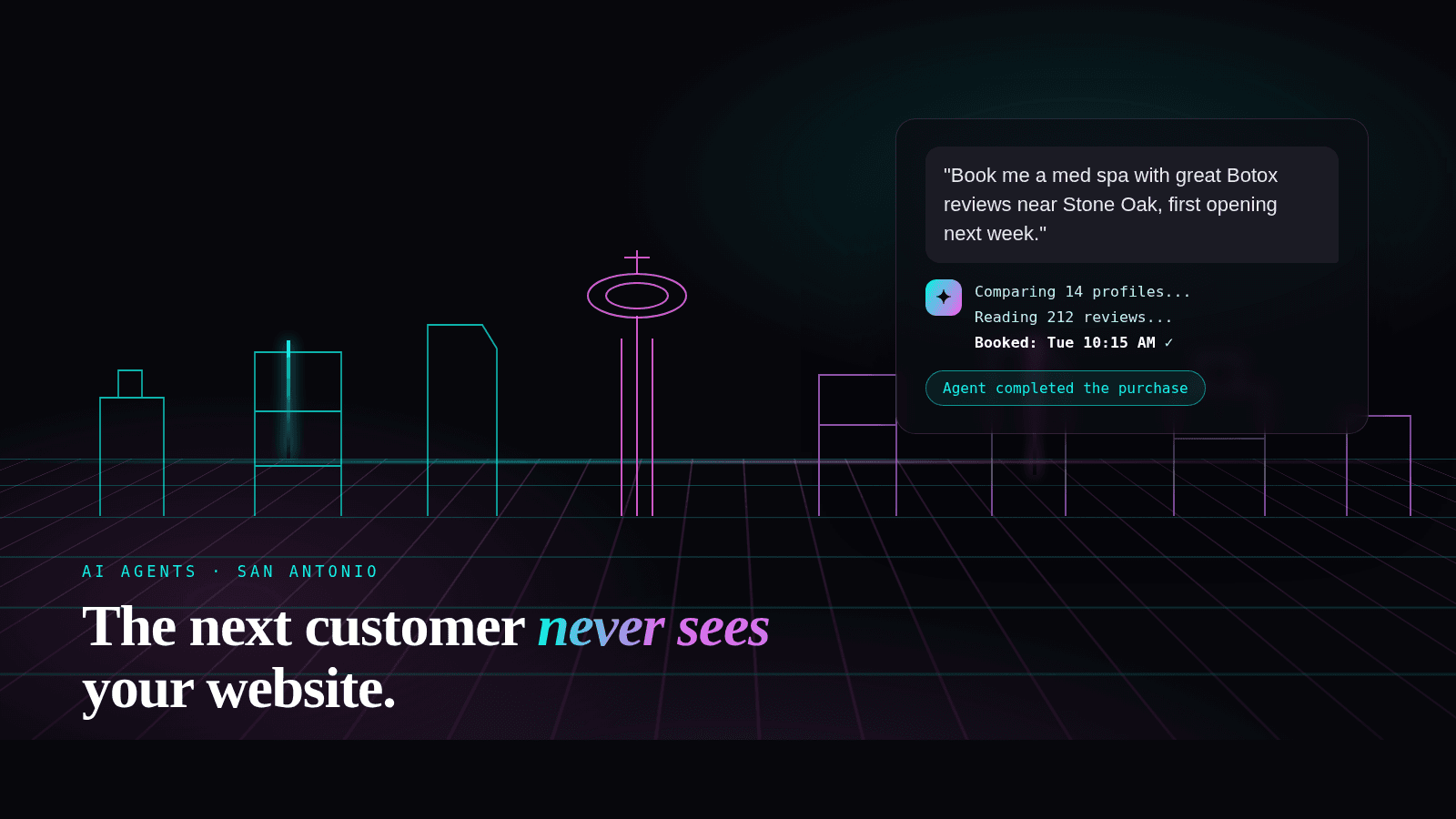
On November 13, 2026, OpenAI introduced ChatGPT Wallet. It is a way for agents in ChatGPT to complete a purchase after the user approves it, without handing the agent the actual card number. If you sell anything online, or you have been watching agentic commerce get closer to real checkout, this is the kind of launch that changes the timeline. I am not going to pretend most of your customers will buy this way next week. OpenAI is rolling it out narrowly on purpose.
What OpenAI actually launched
In its announcement, OpenAI said ChatGPT Wallet is "the first wallet that lets agents pay without access to users’ actual card details and that requires a security check for every purchase." It also says eligible disputes and existing card rewards still apply.
The partnership list is not a rumor. OpenAI named American Express, Mastercard, and Visa. It also said it is working with fraud-prevention partners including Forter, Riskified, Sardine, and Signifyd, and with payment providers including Adyen, Checkout.com, and Stripe, so those systems can recognize a legitimate purchase made by an agent instead of treating it like a bot.
OpenAI's own framing is that people already use ChatGPT to research products, compare options, and decide what to buy. The wallet is how they want those people, and their agents, to finish the purchase. That is OpenAI's claim, not a traffic forecast.
How a purchase works, in plain language
The user adds a card once. Before each purchase, they review the items, the total, and the card, then approve it with a security check such as Face ID or a fingerprint. After that approval, the payment network issues a payment token, a substitute card number, security code, and expiration date, and the charge goes on the selected card. OpenAI says the business and the agent do not receive the actual card details.
OpenAI also says the user is still transacting directly with the business. The business keeps the customer relationship and still owns pricing, fulfillment, returns, and customer service. That matters. This is not OpenAI standing in as the merchant of record, at least as they described it today.
They also said that, over time, they expect people to be able to pre-approve purchases inside set limits, categories, or time windows. That part is a direction, not something I would budget around today.
Who can use it right now
Availability is tight, and that is worth saying clearly.
OpenAI says ChatGPT Wallet begins rolling out today in dots, so a user's dot can complete purchases on their behalf. It is initially available to ChatGPT Pro subscribers aged 18 and older in the United States, with eligible US-issued cards. This is an early phase, not a global default.
If you hear "ChatGPT can buy things now" and picture every shopper, that is not what launched today. A small, paid, US-only group is the starting point. OpenAI said it wants to learn from real-world use with businesses, banks, and payment networks before it expands.
What they asked businesses to do
Alongside the wallet, OpenAI published a Commerce Partner Playbook with tools and guidance. I am not going to turn that into a 12-step tutorial. The announcement itself is enough to see the shape of the work:
- Help customers find accurate product information. OpenAI says to claim your business in ChatGPT and, once verified, keep business details and a product feed current, including pricing and availability.
- Make sure agents are not accidentally blocked. OpenAI specifically mentions configuring a CDN or firewall to recognize signed requests using Web Bot Auth, and checking that general security rules are not stopping ChatGPT agents.
- Talk to your payments and risk providers. Wallet tokens are supposed to work with existing checkout flows, but risk systems may still decline a legitimate agent purchase. That is a real failure mode, not a theory.
- Optionally give agents more ways to work with your systems, through a plugin or WebMCP tools, if that fits how you sell.
If that list sounds familiar, it should. It sits next to the same UCP readiness questions we already ask of online stores: can an agent find you, trust your data, and complete a checkout you still control?
What this does not mean yet
I want to be careful here.
This does not mean AI is about to replace your sales process tomorrow. It does not mean you should rip up your website. It does not mean every decline is a new policy from OpenAI. And I will not invent a percentage of sales that will flow through agents this quarter. Nobody has that number.
What it does mean is that a major consumer product just stood up a real payment path, with the card networks on the announcement, and told businesses that some sites will unintentionally block it. If your firewall, bot management, or fraud tools treat every automated browser as an attack, you may refuse a customer who already decided to buy.
We wrote earlier about AI agents buying for your customers. Today's launch is not a repeat of that piece. It is the payment rail showing up.
A straight next step
If you want a second set of eyes on whether your site, product data, and checkout would let a legitimate agent through, or quietly block one, book a free 15-min strategy call. We will look at it together. I will not promise that ChatGPT is sending you orders. You will leave knowing where the gaps are.
Author: Roger Wong Won, founder of Capture That Media. Want a straight read on whether your business is ready for agent checkout? Book a free 15-min strategy call.
Sources: OpenAI, “Introducing ChatGPT Wallet” (November 13, 2026). Facts about partners, how a purchase works, availability in dots for ChatGPT Pro subscribers 18 and older in the US with eligible US-issued cards, and the Commerce Partner Playbook are taken from that announcement. Where I talk about what happens next, I label it as direction or opinion, not as a shipped feature.
Written by
Roger Wong Won
Founder of Capture That Media. San Antonio's AI Visibility specialist. Award winning since 2018. Writing playbooks the team uses on real client work.
Working on this? Explore our AI Visibility service.
Free · 15 min · No pressure
Keep reading
All articlesAI Is Getting Your Business Facts Wrong. Here Is How to Fix It
Showing up in AI answers is only half the job. Getting quoted correctly is the other half. When an engine hands out hours you changed two years ago, or a number that rings nowhere, it costs you the customer anyway. Here is where the wrong facts come from, how to find them in fifteen minutes, and the order to fix them in.
Is AI Actually Recommending Your Business? How to Check in 10 Minutes (Free)
To find out if AI recommends your business, ask ChatGPT, Perplexity, Google AI, and Gemini the exact questions your customers ask, like 'best [your service] in [your city]', then score whether you're named, linked, and described correctly. If you're missing, it's almost always weak entity authority, too few third-party mentions, or missing schema.
The 7 AI Search Engines San Antonio Businesses Need to Optimize For in 2026
The 7 AI search engines San Antonio businesses need to optimize for in 2026 are: ChatGPT, Google AI Overviews, Perplexity, Claude, Gemini, Microsoft Copilot, and Meta AI. Each has different ranking factors.